How to Organize Buyer and Seller Leads Without a Complicated CRM
A simple lead structure can show who is new, who is hot, who is stuck, and who needs a next action.
Quick answer
Organize buyer and seller leads by relationship type, intent, stage, last activity, and next follow-up date so the CRM supports action instead of storage.
A CRM should help you act. If it becomes a warehouse of names with no clear next step, it turns into another place to avoid.
Use simple lead groups
Start by separating buyer leads, seller leads, past clients, sphere contacts, and active clients. Each group has a different follow-up pattern, so the system should make that difference visible.
Keep the next action close to the record
The most important CRM habit is recording what should happen next. A short note like "Asked about selling in September, send neighborhood pricing update Friday" is more useful than a long transcript with no action.
- Confirm the lead type.
- Set the stage.
- Add the next follow-up date.
- Write one clear next action.
When those fields are current, your daily work list becomes easier to trust.
Key takeaways
- Separate buyers, sellers, past clients, and sphere contacts.
- Keep stage and next follow-up date current.
- Use notes for decisions, not for every tiny detail.
Frequently asked questions
What fields matter most for lead organization?
Stage, intent, source, last activity, next follow-up date, and a concise note usually matter more than dozens of custom fields.
Can a simple CRM still support serious follow-up?
Yes. The right structure can make follow-up easier because the agent sees the next action faster.
Build a clearer follow-up habit.
RelkoAI helps solo real estate agents organize leads, deals, tasks, and today's next actions in one simple workspace.
Related articles
What to Do When a Hot Lead Stops Responding
A quiet hot lead does not always mean a lost lead. It often means the next follow-up needs a better reason.
Read article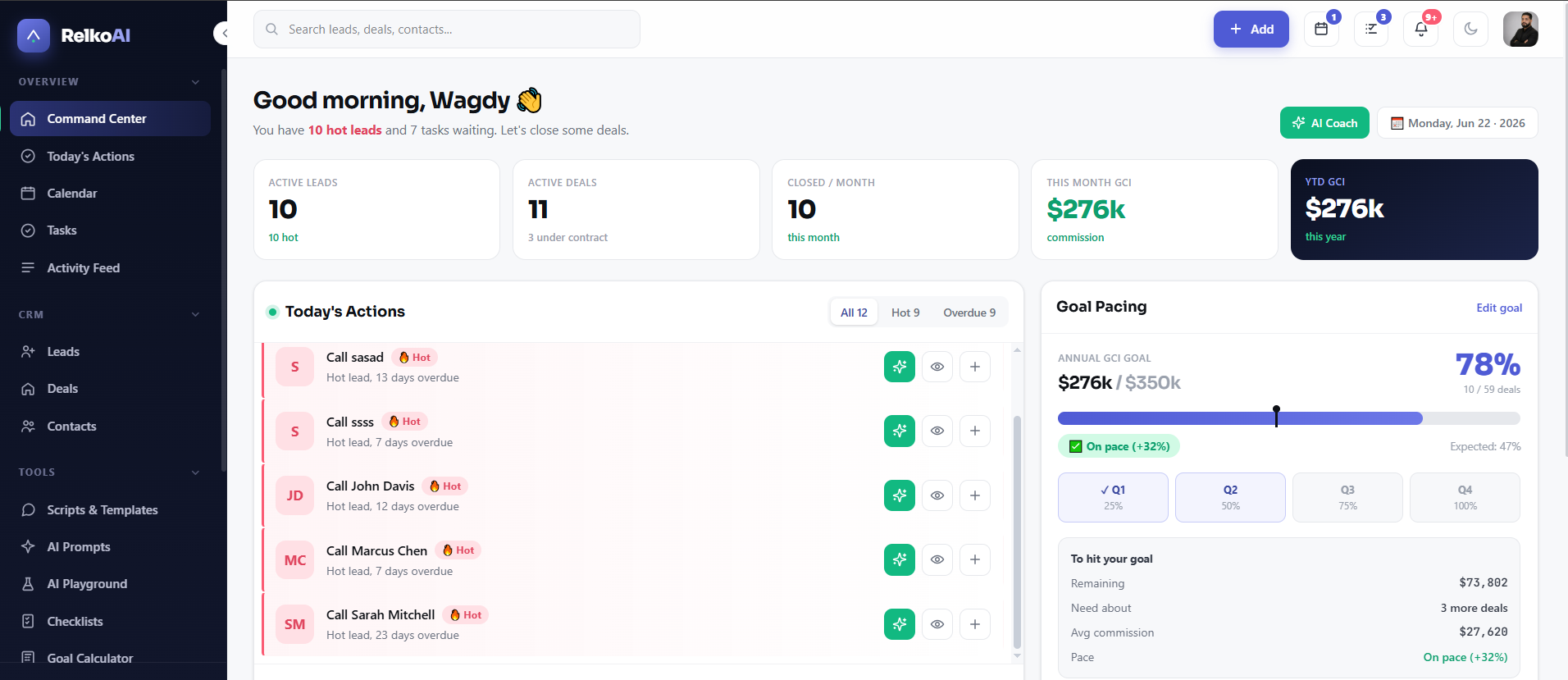
How to Turn Scattered Tasks Into a Simple Daily Action List
A daily action list helps agents move from scattered reminders to a clear set of next steps.
Read articleHow AI Can Help Agents Write Better Follow-Up Without Replacing Judgment
AI can help with wording, structure, and options, but the agent should stay in control of what gets used.
Read article